

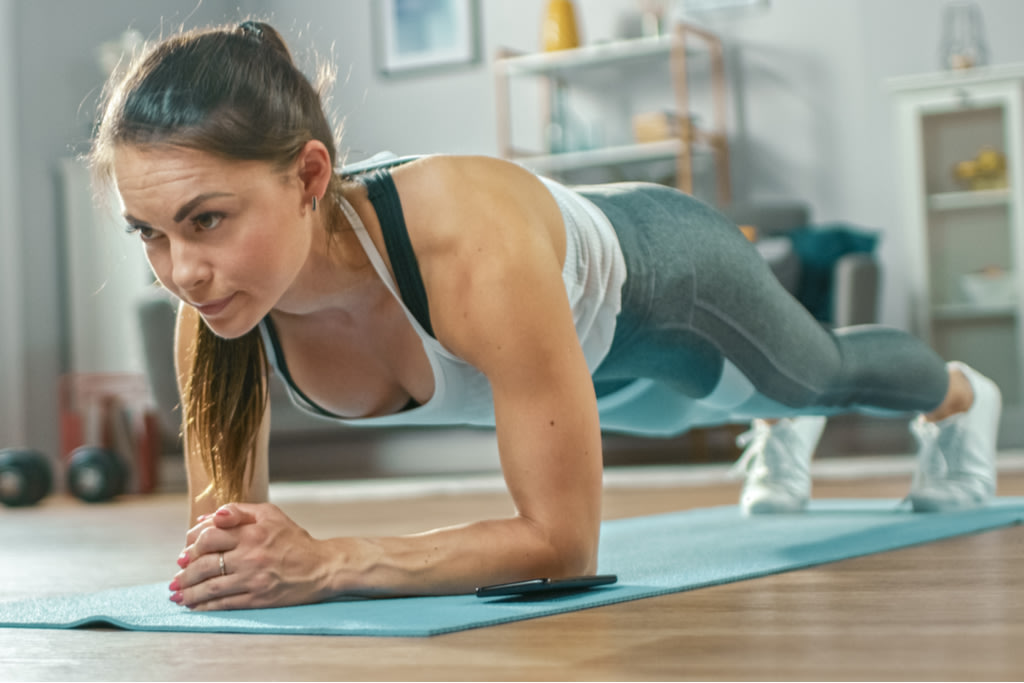
When people think about building a powerful, muscular upper body, their minds usually drift toward rows of heavy dumbbells, shiny weight machines, and crowded barbell benches. While lifting external weights is undeniably effective, it is far from the only path to a strong physique. In fact, relying solely on weights overlooks one of the most versatile, functional, and demanding training tools available: your own bodyweight.
Calisthenics, or bodyweight training, has been the foundation of physical conditioning for centuries, used by gymnasts, martial artists, and elite military forces worldwide. Moving your own body through space requires a level of neuromuscular coordination, core stability, and joint control that static weightlifting machines simply cannot replicate.
By mastering the mechanics of leveraging your body against gravity, you can develop exceptional upper body strength, improve your athletic performance, and reduce your risk of injury, all without setting foot in a traditional gym.
The Advantages of Bodyweight Strength Training
Before diving into the specific movements, it is important to understand why calisthenics is so effective for building real-world power. When you lift a dumbbell, you isolate a specific muscle group. When you perform a high-level bodyweight exercise, your entire kinetic chain must fire simultaneously to maintain balance and form.
Enhanced Core Integration
In almost every upper body calisthenics movement, your core acts as the bridge connecting your lower body to your upper body. There is no sitting down on a padded bench to press a weight; your abdominals, lower back, obliques, and glutes must remain tightly contracted to stabilize your spine. This transforms every single repetition into a compound, full-body effort.
Improved Joint Health and Mobility
Bodyweight exercises generally allow your joints to move through their natural, biologically optimal pathways. Because you are not locked into a fixed plane of motion prescribed by a machine, your shoulders, elbows, and wrists can rotate naturally. This strengthens the stabilizing tendons and ligaments surrounding the joints, which builds long-term resilience against chronic strains.
1. The Pull-Up: The Ultimate Back Builder
If there is one exercise that defines upper body pulling strength, it is the pull-up. This movement targets the latissimus dorsi, the large muscles of your back that create a wide, powerful V-taper. It also heavily recruits the rhomboids, rear deltoids, traps, biceps, and forearms.
-
The Setup: Hang from a sturdy overhead bar with an overhand grip, with your hands positioned slightly wider than shoulder-width apart. Let your arms fully extend into a dead hang.
-
The Execution: Squeeze your shoulder blades down and back before you bend your elbows. Drive your elbows down toward your ribs to pull your chest up toward the bar. Continue pulling until your chin clears the bar comfortably. Pause for a split second, then lower yourself with complete control back to the starting position.
Common Mistakes to Avoid
The most frequent error in the pull-up is relying on momentum, often referred to as kipping or swinging the legs. This transfers the workload away from the upper back and places unnecessary stress on the shoulders.
Keep your legs straight or crossed at the ankles, squeeze your glutes, and ensure every repetition starts from a dead hang to maximize muscle fiber recruitment.
2. The Parallel Bar Dip: The Upper Body Squat
Often referred to as the king of pushing movements, the dip is a highly demanding exercise that torches the lower pectorals, triceps, and anterior deltoids. Because your entire bodyweight is suspended in mid-air, the demands on your shoulder stabilizers are exceptionally high.
-
The Setup: Grip the parallel bars and press yourself up into the starting position, lock your elbows out, and keep your shoulders packed down away from your ears.
-
The Execution: Lean your torso slightly forward to place the emphasis on the chest. Bend your elbows and lower your body smoothly until your upper arms are at least parallel to the floor, forming a ninety-degree angle at the elbow joint. Press firmly through your palms to return to the locked-out starting position.
Protecting Your Shoulder Joint
Dips are incredibly effective but can be tough on the shoulders if performed incorrectly. Avoid letting your shoulders roll forward as you descend. Keep your chest proud and proud throughout the movement, and do not drop below the parallel mark unless you possess advanced shoulder mobility and strength.
3. The Handstand Push-Up: Elite Vertical Pressing
To build massive, strong shoulders without a barbell, you must turn your training upside down. The handstand push-up is an advanced bodyweight movement that replicates the mechanics of a heavy overhead press, targeting the deltoids, triceps, and upper traps.
-
The Setup: Kick up into a handstand against a smooth wall, keeping your hands roughly six inches away from the baseboard. Keep your body tight and hollow, avoiding an excessive arch in your lower back.
-
The Execution: Look at the wall or slightly between your hands. Slowly bend your elbows, lowering your head down and slightly forward toward the floor. Your head should form the top point of a triangle, with your hands forming the base. Touch the floor lightly, then press forcefully back up to the top lock-out.
4. The Deficit Push-Up: Maximizing Chest Stretch
The standard push-up is a classic, but your chest muscles stop receiving an optimal stretch once your torso hits the flat floor. By introducing a deficit, you increase the range of motion, forcing the pectoral muscles to work through a deeper, harder stretch phase that triggers greater muscle growth.
-
The Setup: Place two stable objects of equal height, such as yoga blocks, parallettes, or weight plates, on the floor slightly wider than shoulder-width. Place your hands on these objects and step your feet back into a rigid plank position.
-
The Execution: Lower your body slowly, keeping your elbows tucked at a forty-five-degree angle relative to your torso. Lower your chest past the level of your hands until you feel a deep stretch across your pectorals. Press back up smoothly, squeezing your chest hard at the top.
5. The Inverted Row: Balancing the Posterior Chain
To maintain healthy shoulders and a balanced physique, you must match your pushing volume with an equal amount of pulling volume. The inverted row is a phenomenal horizontal pulling movement that isolates the mid-back, traps, rear deltoids, and core.
-
The Setup: Position a bar in a rack or a set of gymnastic rings at roughly waist height. Lie underneath the bar, grip it with an overhand grip, and extend your legs straight out, balancing on your heels so your body forms a straight line from head to toe.
-
The Execution: Keep your body perfectly rigid. Pull your chest up toward the bar by driving your elbows backward. Squeeze your shoulder blades together intensely at the top of the movement, then lower yourself with a slow, controlled cadence.
Frequently Asked Questions
How can I make push-ups harder without using weights if I can already do fifty reps?
To keep building strength once high repetitions become easy, you must change the leverage of the movement. You can transition to decline push-ups by placing your feet on a high bench, experiment with archer push-ups where one arm stays completely straight, or slowly work toward the one-arm push-up by shifting your bodyweight laterally.
What should I do if my wrists hurt during bodyweight training?
Wrist pain is common when transitioning to calisthenics because movements like push-ups force the wrist into deep extension under load. You can alleviate this stress by performing push-ups on your knuckles, utilizing push-up handles, or using wooden parallettes. These tools allow your wrists to remain in a neutral, straight alignment.
Are chin-ups or pull-ups better for overall upper body development?
Neither is inherently better; they simply emphasize different muscle groups. Pull-ups use an overhand grip and place a greater demand on the latissimus dorsi and lower traps. Chin-ups use an underhand grip, which places the biceps in a mechanically advantageous position, leading to higher bicep activation and recruitment.
How do I safely train for a pull-up if I cannot perform a single repetition yet?
The best way to build foundational pull-up strength is through eccentric training, also known as negatives. Use a box to jump to the top of the bar, then lower yourself down as slowly as possible, aiming for a full five-second descent. You can also use resistance bands looped around your feet to assist you.
Can bodyweight exercises build as much muscle mass as heavy weightlifting?
Yes, your muscles respond to mechanical tension, metabolic stress, and muscle damage, regardless of whether that tension comes from an iron barbell or your own bodyweight. As long as you consistently manipulate leverage, speed, and volume to keep the exercises challenging, you can stimulate significant muscular hypertrophy.
Why do my elbows click or pop when performing parallel bar dips?
Clicking or popping in the elbow joints is often caused by tight triceps tendons or a sudden shift in the ulnar nerve over the elbow bone under heavy loads. Ensure you warm up thoroughly with light arm circles and band pull-aparts, keep your elbows from flaring out excessively to the sides, and avoid dropping down too quickly.
How many times per week should I train my upper body using calisthenics?
For optimal strength gains and recovery, training your upper body two to three times per week is ideal. This allows you to accumulate enough weekly volume to stimulate muscle adaptations while giving your tendons and central nervous system forty-eight to seventy-two hours of rest between intense sessions.